
SECURITY SYSTEM SMART SIREN II KIT
J038412009-07-02
GENERAL
Kit Number
68319-06A
Models
For model fitment information, see the P&A retail catalog or the Parts and Accessories section of www.harley-davidson.com (English only).
Additional Parts Required
The motorcycle must be equipped with a Harley-Davidson® Factory Security System before this kit can be installed. See the P&A retail catalog or the Parts and Accessories section of www.harley-davidson.com (English only) for Factory Security Systems and model fitment information.
Tools and Supplies Required
Either Permatex® anti-seize lubricant (H-D Part No. 98960-97) or Loctite® SILVER GRADE anti-seize lubricant (H-D Part No. 98960-97) will be needed during the installation of the rear wheel. These items are available from a Harley-Davidson dealer.
 WARNING
Rider and passenger safety depend upon the correct installation of this kit. Use the appropriate service manual procedures. If the procedure is not within your capabilities or you do not have the correct tools, have a Harley-Davidson dealer perform the installation. Improper installation of this kit could result in death or serious injury. (00333b)
NOTE
This instruction sheet refers to service manual information. A service manual for this year/model motorcycle is required for this installation and is available from a Harley-Davidson dealer.
PREPARATION
| 1. | Block the motorcycle underneath the frame so the weight of the vehicle is off the rear wheel. | |
| 2. | Refer to POWER DISCONNECT in the owner's manual and follow the instructions to prevent the security module from actuating the siren. | |
| WARNING To prevent accidental vehicle start-up, which could cause death or serious injury, disconnect negative (-) battery cable before proceeding. (00048a) | ||
| 3. | Remove the seat following the instructions in the service manual and disconnect the negative (-) battery cable. Save all seat hardware for installation. | |
| 4. | Follow the instructions in the service manual to remove the rear wheel, belt guard and debris deflector. |
INSTALLATION
| 1. | See Figure 1. Locate the siren connector [142] (1). It is covered by a dust cap (2) and is at the end of an unconnected 216 mm (8½ in) long harness leg coming from the security system connector. Clip the cable straps to free the connector. | 
Figure 1. Remove Vapor Valve Bracket | ||||||||||||||||||
| 2. | Pull the vapor valve from its mount on the vapor valve bracket. Remove the screw that retains the bracket to the transmission case, and replace the bracket with the new bracket (3) from the kit. The bracket supplied with the kit is longer and includes a 13 mm (½ in) long stud at the end. Use the same screw to mount the kit bracket, and tighten to 8–11 N·m (5–8 ft-lbs). | 
Figure 2. Install Siren Bracket | ||||||||||||||||||
| 3. | See Figure 2. Install the siren bracket (1) from the kit by slipping the large hole on the bottom tab over the stud on the vapor valve bracket (2). Align the two smaller holes on the siren bracket with the clinch nuts on the lower flange of the electrical panel, and install the two screws (3) from the kit into the clinch nuts. Do not fully tighten the screws at this time. | |||||||||||||||||||
| 4. | Install the nut (4) from the kit on the vapor valve bracket stud. Tighten the nut to 8–12 N·m (5–9 ft-lbs). Tighten the screws to 8–12 N·m (5–9 ft-lbs). The assembly should look as shown in Figure 2. |  Figure 3. Install Cable Straps | ||||||||||||||||||
| 5. | See Figure 3. Thread the two long cable straps from the kit through the opening between the siren bracket and the electrical panel, with the heads toward the top of the motorcycle. | |||||||||||||||||||
| 6. | See Figure 4. With the antenna (4) down and the sounder disc (3) facing outward, install the siren (1) by slipping the connector neck through the opening in the bottom flange of the siren bracket. Route the siren antenna wire (4) upward in front of the siren, forward of the upper rear-fork tube, and through the opening in the upper left of the rear fender. Push the top edge of the siren into the bracket until the siren is fully seated. NOTE Make sure that the antenna does not get pinched by the siren bracket or caught in the wire ties. | |||||||||||||||||||
| 7. | Loop the heads of the wire ties (5) down and slide the tails through them so that the ties are positioned as shown in Figure 4 when cinched tight. | |||||||||||||||||||
| 8. | Remove the dust cap from the siren box connector [142] (2). Insert the connector into the siren box receptacle until the connector latches securely. | 
Figure 4. Install Siren 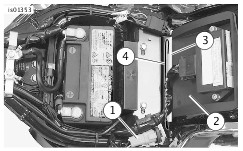
Figure 5. Siren antenna mounting | ||||||||||||||||||
| 9. | See Figure 5. Gently pull the siren antenna wire up through the fender opening, and lay it across the concave surface at the base of the electrical box. Observe where the small-diameter portion of the wire begins, and where that point falls on the electrical box. NOTE The hook-and-loop fastener may need to extend slightly into the fender opening to verify that the entire small-diameter portion of the antenna is protected from metal contact. | |||||||||||||||||||
| 10. | Clean the concave surface at the base of the electrical box with a mixture of 50 to 70% isopropyl alcohol and 30 to 50% water. Allow to dry thoroughly. | |||||||||||||||||||
| 11. | See Figure 6. Get the adhesive-backed hook fastener (7) from the kit. Peel the paper backing from the fastener adhesive, and attach the fastener to the cleaned area of the electrical box, allowing it to extend as needed into the fender opening. | |||||||||||||||||||
| 12. | Lay the siren antenna wire down the center of the installed fastener half, and straighten the antenna along the length of the fastener. The end of the antenna can be turned back as shown to verify no metal contact. NOTE In order for the antenna to work properly, none of the small diameter portion should touch the metal parts of the vehicle. | |||||||||||||||||||
| 13. | Get the plain-backed loop fastener (8) from the kit. Install the loop fastener onto the hook fastener installed on the electrical box, capturing the antenna wire to hold it firmly in place. | |||||||||||||||||||
| 14. | Follow the instructions in the service manual to install the rear wheel, belt guard and debris deflector. NOTE Verify that the ignition key switch is in the OFF position before attaching the negative battery cable. | |||||||||||||||||||
| 15. | Apply a light coat of Harley-Davidson electrical contact lubricant (H-D Part No. 99861-02), petroleum jelly or corrosion retardant material to the negative battery terminal. Refer to the owner's manual and follow the instructions to connect the negative battery cable. | |||||||||||||||||||
| WARNING After installing seat, pull upward on seat to be sure it is locked in position. While riding, a loose seat can shift causing loss of control, which could result in death or serious injury. (00070b) | ||||||||||||||||||||
| 16. | Refer to the owner's manual and follow the instructions to install the seat. |
NOTE
The siren may not function properly when first installed. Nickel metal hydride (NiMH) rechargeable batteries discharge fairly rapidly when stored. They will lose as much as 1%-2% of their charge per day, and after a few months of storage at room temperature will be mostly discharged. If stored for a very long period without charging, they may need a few charging cycles to regain their full capacity.
To charge the NiMH battery, operate the motorcycle for a minimum of four hours.
SIREN DIAGNOSTICS
- If the siren is armed and the internal siren battery is dead, shorted, disconnected, or has been charging for a period longer than 24 hours, the siren will respond with three chirps on arming instead of two.
- The internal siren battery may not charge if the vehicle's charging system is producing less than 12.5 volts.
- If the siren does not chirp two or three times on a valid arming command from the security system, the siren is either in chirpless mode, not connected, not working, or the siren wiring was opened or shorted while the siren was disarmed.
- If the siren enters the self-driven mode where it is powered from the siren's internal 9 volt battery, the turn signal lamps may or may not alternately flash. If the security system activates the siren, the turn signal lamps will alternately flash. If the siren has been armed and a security event occurs, and the siren is in self-driven mode, the siren will alarm for 20-30 seconds and then turn off for 5-10 seconds. This alarm cycle will be repeated ten times if the siren is in the self-driven mode.
SMART SIREN II BATTERY REPLACEMENT
The siren's internal 9-volt battery is rechargeable and does not need to be replaced on a regular basis. Battery life under normal conditions is approximately three to six years.
NOTE
When battery replacement is needed, only a nickel metal hydride
(NiMH) 9 volt battery should be used in the siren. These are widely available at local battery outlets.
To Replace the Battery:
- Refer to POWER DISCONNECT in the owner's manual and follow the instructions to prevent the security module from actuating the siren.
- Remove the siren box from the vehicle. Refer to the siren installation procedures in this instruction sheet.
- Open the battery cover by inserting a flat-blade screwdriver into one of the slots on the side of the siren box. Press until one corner of the cover pops up slightly.
- Insert the screwdriver into the second slot, and press until the cover pops open. Remove the cover and gasket.
- Remove the old battery from the siren box, and gently unfasten the snap connector from the battery. Save the grease coating the terminals.
- Coat the terminals of the snap connector and the new NiMH nine-volt battery completely with the grease from the old connection.
- Snap the connector onto the new battery, and install the battery into the siren box.
- Set the siren box on a work surface with the battery opening facing up. Position the gasket and battery cover onto the siren box with the rounded corners facing out.
- Press the cover down onto the siren box and press the tabs in with the screwdriver until the tabs snap into the slots in the box.
- Install the siren box into the vehicle.
- Dispose of the old NiMH battery in accordance with local regulations.
NOTE
If not enough lubricant remains to completely cover the terminals, Electrical Contact Lubricant (H-D Part No. 99861-02) is compatible, and is available from a Harley-Davidson dealer
SERVICE PARTS

Figure 6. Service Parts, Smart Siren II Kit
Table 1. Service Parts
Item | Description (Quantity) | Part Number |
|---|---|---|
1 | Smart Siren II, security system | 68970-06A |
2 | Siren bracket | Not sold separately |
3 | Vapor valve bracket | 27153-01 |
4 | Screw, hex flange head, 1/4-20 x 12.7 mm (½ in) long (2) | 3588 |
5 | Nut, #10-24 | 7499 |
6 | Cable strap (2) | 10039 |
7 | Hook fastener, adhesive-backed, 210 x 38 mm ( x in). | Not sold separately |
8 | Loop fastener, plain-backed, 210 x 38 mm ( x in). | 59274-01 |
Item mentioned in text: | ||
A | Battery, 9 volt NiMH (purchase locally) | |