
Kits | Suggested Tools | Skill Level(1) |
|---|---|---|
45400392A, 45400393A | Safety Glasses, Torque Wrench, DIGITAL TECHNICIAN II (Part Number:HD-48650) |  |
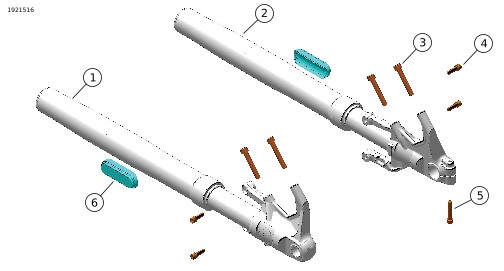
 | Verify that all contents are present in the kit before installing or removing items from vehicle. | ||||
|---|---|---|---|---|---|
Item | Qty | Description | Part No. | Notes | |
 | 1 | 1 | 47mm fork assembly, left, telescoping, black | 45400410 | |
| 47mm fork assembly, left, telescoping, gold | 45400412 | |||
| 2 | 1 | 47mm fork assembly, right, telescoping, black | 45400409 | |
| 47mm fork assembly, right, telescoping, gold | 45400411 | |||
| 3 | 4 | Screw, socket head | 10200802 | |
| 4 | 4 | Screw, hex socket, lock | 2479 | |
| 5 | 1 | Screw, cap screw, M8 | 45500132 | |
| 6 | 2 | Reflector, amber | 67900659 | |
| 7 | 2 | Reflector, amber, flat | 67900212A | |
- Go to h-d.com/isheets
- Scan QR code in upper left corner of the instruction sheet
 WARNING
- A Harley-Davidson dealer.
- H-D Service Information Portal, a subscription-based access available for most 2001 and newer models.
- 2024-later Street Glide (FLHX): Separate purchase of Screamin’ Eagle Ohlins® Inverted Fork Installation Kit (Part No. 45400391) is required.
- 2024-later Road Glide (FLTRX): Separate purchase of Screamin’ Eagle Ohlins® Inverted Fork Installation Kit (Part No. 45400390) is required.
- Axial Mount calipers to radial mount caliper requires Anti-lock Braking System (ABS) re-flash using Digital Technician II (DT II).
- Servicing Front Forks: A separate purchase of Fork Oil (Part No. 62600133).
| 1. | Secure motorcycle for service. See service manual. a. Set motorcycle upright. b. Raise front wheel for service. c. Secure with tie-downs. | |
| 2. | Remove left saddlebag. See service manual. | |
| 3. | Remove left side cover. See service manual. | |
| 4. | Remove main fuse. See service manual. |
| 1. | Remove outer fairing. See service manual. | |
| 2. | Remove air deflector assembly. See service manual. | |
| 3. | Remove dash panel. See service manual. | |
| 4. | Detach fairing for service: a. See Figure 2. Disconnect harness connectors (1). b. Remove wire ties (2). c. See Figure 3. Remove screws (1). d. Remove fairing (3). e. Place fairing on non scratch surface. |
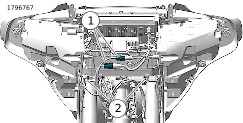
| 1 | Connectors (2) |
| 2 | Wire ties (3) |
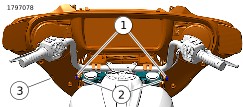
| 1 | Screws (2) |
| 2 | Guide pins (2) |
| 3 | Fairing |
| 1. | Remove windshield. See service manual. | |
| 2. | Remove air duct cover and air duct bezel. See service manual. | |
| 3. | Remove air duct vane assembly. See service manual. | |
| 4. | Remove left and right speaker grilles. See service manual. | |
| 5. | Remove outer fairing. See service manual. | |
| 6. | Remove headlamp. See service manual. | |
| 7. | See Figure 4. Release wire locator (1) and route headlamp wire (8) out of inner fairing assembly (3). | |
| 8. | Disconnect two main harness connectors (7). | |
| 9. | Draw branches of main harness out of inner fairing through openings in fairing bracket. | |
| 10. | Remove inner fairing support screws (5). | |
| 11. | Remove inner fairing mount screws (2). | |
| 12. | Raise the inner fairing assembly (3) off the inner fairing mounting bracket (4) and remove. |
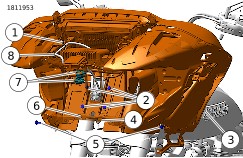
| 1 | Wire locator |
| 2 | Screws (4) |
| 3 | Inner fairing assembly |
| 4 | Inner fairing mounting bracket |
| 5 | Screws (2) |
| 6 | Fairing main support bracket |
| 7 | Main harness connectors (2) |
| 8 | Headlamp harness |
| 1. | Remove front fender. See service manual. | |
| 2. | Detach front brake calipers. See service manual. a. If working on a CVO model, see CVO supplement service manual. | |
| 3. | Remove front wheel. See service manual. | |
| 4. | Remove Original Equipment (OE) front forks. See service manual. a. If working on a CVO model, see CVO supplement service manual. |
- Front brake calipers
- Steering Head/Fork Stem and bracket assembly
- Front wheel speed sensor
- Steering head bearing cups
| 1. | Install Screamin Eagle Ohlins® Inverted Fork Installation kit. Refer to Installation Requirements. | |
| 2. | Install front fork tube assembly. a. Insert each fork tube assembly (4) through lower fork bracket (6) and upper fork bracket (2). b. Refer to Table 3. Measure distance (3) from top of fork tube to top of lower fork bracket (6) to set fork height. c. Tighten lower fork bracket pinch screws (5) alternately (top fastener, bottom fastener, repeat) until specification is maintained. Torque: 20–24.5 N·m (15–18 ft-lbs) Lower pinch screw d. Tighten upper fork bracket pinch screws (1). Torque: 20–24.5 N·m (15–18 ft-lbs) Upper pinch screw |
FORK INSTALLATION DISTANCE | IN | MM |
|---|---|---|
Distance | 8.83-8.95 | 224.3-227.3 |
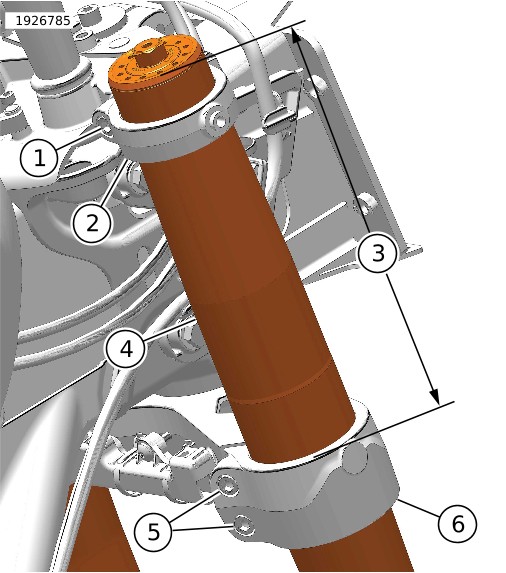
| 1 | Upper fork bracket pinch screw |
| 2 | Upper fork bracket |
| 3 | Distance |
| 4 | Fork tube assembly |
| 5 | Lower fork bracket pinch screw (2) |
| 6 | Lower fork bracket |
| 1. | Attach: a. See Figure 3. Install fairing (3). b. Install screws (1). c. See Figure 2. Install wire ties (2). d. Connect harness connectors (1). | |
| 2. | Attach fairing for service. | |
| 3. | Install dash panel. See service manual. | |
| 4. | Install air deflector assembly. See service manual. | |
| 5. | Install outer fairing. See service manual. |
| 1. | Lower inner fairing assembly (3) onto the inner fairing mounting bracket (4) and install. | |
| 2. | Install inner fairing mount screws (2). | |
| 3. | Install inner fairing support screws (5). | |
| 4. | Route branches of main harness into inner fairing through openings in fairing bracket. | |
| 5. | Connect two main harness connectors (7). | |
| 6. | See Figure 4. Route headlamp wire (8) into inner fairing assembly (3) and secure wire locator (1). | |
| 7. | Install headlamp. See service manual. | |
| 8. | Install outer fairing. See service manual. | |
| 9. | Install left and right speaker grilles. See service manual. | |
| 10. | Install air duct vane assembly. See service manual. | |
| 11. | Install air duct cover and air duct bezel. See service manual. | |
| 12. | Install windshield. See service manual. |
| 1. | Models without fairing lowers installed and fork mounted reflectors: a. Ambient temperature should be at least 16 °C (60 °F) for proper adhesion of the reflectors to the fork sliders. b. Allow at least 24 hours after applying the reflectors before exposing the area to vigorous washing, strong water spray or extreme weather. c. The adhesive bond will increase to maximum strength after about 72 hours at normal room temperature. | |
| 2. | Clean reflector mounting area of fork slider with a 50:50 mixture of isopropyl alcohol and distilled water. Allow to dry completely. | |
| 3. | See Figure 6. Peel liner from tape. Install reflector (1) in position (3) on fork as shown. Press firmly into place. a. Hold reflector in position with steady pressure for approximately one minute. | |
| 4. | Repeat procedure on opposite side. |
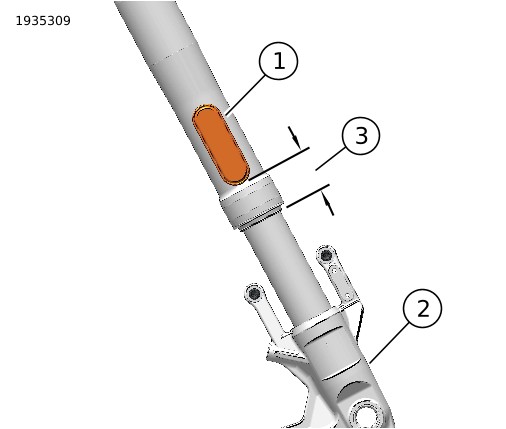
| 1 | Reflector |
| 2 | Inverted fork |
| 3 | Dimension: 40mm ±5 |
| 1. | See Figure 7. Install reflectors on left and right sides of front fender. a. Ambient temperature should be at least 16 °C (60 °F) for proper adhesion of the reflectors to the front fender. b. Allow at least 24 hours after applying the reflectors before exposing the area to vigorous washing, strong water spray or extreme weather. c. The adhesive bond will increase to maximum strength after about 72 hours at normal room temperature. | |
| 2. | Clean and prep surfaces on both sides of front fender. NOTE See Figure 7. Reflector should be located approximately ¼ inch (6.35 mm) (1) from rivet and align to the lower fender edge (3). a. Peel liner from tape. Install reflector (2) in position (3) on fork as shown. Press firmly into place. b. Hold reflector in position with steady pressure for approximately one minute. | |
| 3. | Repeat on opposite side. |
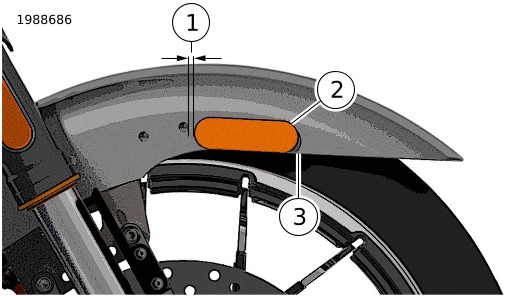
| 1 | Dimension: ¼ inch (6.35 mm) |
| 2 | Reflector |
| 3 | Fender edge |
| 1. | Install front wheel. See service manual. | |
| 2. | Attach front brake calipers. See CVO supplement service manual. | |
| 3. | Install front fender. See service manual. NOTE When performing Calibration Reflash to ABS / Electro Hydraulic Control Unit (EHCU) per kit instructions for the inverted forks > You must click through on EHCU in the reflash section on DT II to see the option to select for the style of forks installed, even if the EHCU calibration shows up-to-date. | |
| 4. | Non-CVO models only: Re-flash ABS system using special tool. Special Tool: DIGITAL TECHNICIAN II (HD-48650) | |
| 5. | Check and adjust swing-back as needed. Follow swing-back specification in the service manual per model. a. For example, after installing Ohlins inverted forks on a FLTRX, set the swing-back according to the specification for FLTRX. |
- Compression Damping is how quickly or slowly the spring is allowed to compress.
- Rebound Damping is how quickly or slowly the spring extends back to its original position.
- When a fork is compressed, the piston rod is pushed into the damper tube.
- Compression resistance controls how much a vehicle's suspension moves when it hits a bump.
- More compression resistance results in a firmer suspension.
- Compression adjustment can help with handling and cornering.
- When a fork rebounds, the piston rod is pulled out of the damper tube.
- Rebound controls how quickly a fork returns to its neutral position after being compressed.
- Rebound adjustment can help with comfort.
- Too much rebound can cause the forks to pack, which can lead to an uncomfortable ride.
- Fork preload is the amount of compression applied to a spring when the fork is fully extended. It's used to adjust the suspension's range of motion and the amount of force the spring pushes back.
- More preload raises the vehicle's suspension, making it harder and helping prevent bottoming out.
- Less preload lowers the vehicle's suspension, making it softer and helping prevent nose-diving when braking
Rider Weight | Front Forks | |
|---|---|---|
LBS | KG | Turns from Minimum1 |
<150 | <68 | 5 |
170 | 77 | 6 |
190 | 86 | 7 |
210 | 95 | 8 |
230 | 104 | 9 |
250 | 113 | 10 |
270 | 122 | 11 |
290 | 132 | 12 |
300 to GVWR | 131 to GVWR | 13 |
NOTE DO NOT exceed Gross Vehicle Weight Rating (GVWR) for any loading condition. | ||
- The right fork is rebound damping only.
- The left fork is compression damping only.
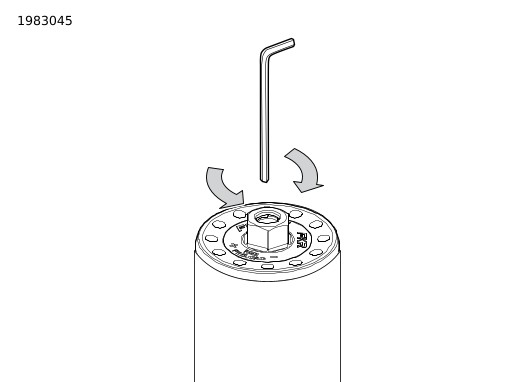
Compression1 | Rebound1 |
|---|---|
16 | 10 |
Note: (1) Damping adjuster settings are done by tightening adjuster clockwise until it stops and then turning the adjuster counter-clockwise to the first click (this is position 1), then count clicks while turning adjuster counter-clockwise to the desired setting | |
WARNING| 1. | Service for front forks is recommended every 18,600 miles (30,000 km) or 3 years. | |
| 2. | Maintain product packaging to send front forks to an Öhlins certified dealer for service or repair, outside of what is shown in this instructions. |
- Seal
- Seal slider
- Dust seal
- Bushings
- O-rings
- Ohlins High Performance Fork Oil (Part No. 62600133)
| 1. | See Figure 10. Clamp fork leg (2) in bench vise (1) with soft jaws. | |||||||||||||||||
| 2. | Release spring preload by turning adjustment nut (3) fully counterclockwise. Special Tool: 14MM PRELOAD SOCKET TOOL (14900176) | |||||||||||||||||
| 3. | Open damping adjusters (4) by turning fully counterclockwise. Special Tool: 3MM ALLEN KEY TOOL (14900159) | |||||||||||||||||
| 4. | Install top nut tool (8) to top cap. Special Tool: TOP CAP R&T (14900160) | |||||||||||||||||
| 5. | Loosen outer tube (7) from top cap. | |||||||||||||||||
| 6. | Slide outer tube (7) all the way down. | |||||||||||||||||
| 7. | Install spanner (6) to top cap lock nut. Special Tool: 17MM SPANNER TOOL (14900172) | |||||||||||||||||
| 8. | Using wrench (5), remove top cap from shaft. Special Tool: 14MM PRELOAD SOCKET TOOL (14900176) | 
Figure 10. Disassemble Fork Tube | ||||||||||||||||
| 9. | See Figure 11. Install spanner (3) to top cap lock nut (1). Special Tool: 17MM SPANNER TOOL (14900172) | |||||||||||||||||
| 10. | Remove lock nut (1) using a deep well socket (2). | 
Figure 11. Remove Lock Nut | ||||||||||||||||
| 11. | See Figure 12. Remove spring seat (2). | |||||||||||||||||
| 12. | Remove spring (3). | |||||||||||||||||
| 13. | Remove preload tube (4). a. Use a wire with a hook. | 
Figure 12. Remove Preload Tube | ||||||||||||||||
| 14. | Drain oil from fork tube. a. Use a suitable container. b. Follow local city, county or state guidelines for fluid disposal. | |||||||||||||||||
| 15. | See Figure 10. Clamp fork leg (2) in bench vise (1) with soft jaws. | |||||||||||||||||
| 16. | Remove outer tube. | |||||||||||||||||
| 17. | See Figure 13. Remove scraper (2) from outer tube. | |||||||||||||||||
| 18. | Put outer tube on workbench with seal side up. NOTE
| |||||||||||||||||
| 19. | Remove circlip (3), seal (4) and support washer (5). | 
Figure 13. Scraper Assembly | ||||||||||||||||
| 20. | See Figure 14. Put outer tube with seal side down on a soft surface. | |||||||||||||||||
| 21. | Use a heat gun to heat up outer tube where bushings are positioned. Temperature: 100 °C (212 °F) Special Tool: FORK BUSHING TOOL (14900162) | |||||||||||||||||
| 22. | Use attachment bar together with bushing removal tool and a plastic hammer to remove bushings. Special Tool: 43MM BUSHING REMOVAL TOOL (14900165) Special Tool: 48MM BUSHING REMOVAL TOOL (14900166) | 
Figure 14. Remove Bushings | ||||||||||||||||
| 23. | Clean all parts thoroughly. | |||||||||||||||||
| 24. | Basic service kit contains: a. Upper bushings b. Lower bushings c. Fork seals d. Top cap O-rings | |||||||||||||||||
| 25. | See Figure 15. Use a long brush (1) to apply threadlocker on upper bushing seat inside outer tube (2).LOCTITE 243 MEDIUM STRENGTH THREADLOCKER AND SEALANT (BLUE) (99642-97) | |||||||||||||||||
| 26. | Install new upper bushing. | 
Figure 15. Apply Loctite | ||||||||||||||||
| 27. | See Figure 16. Put outer tube (3) with seal side up on a soft surface. | |||||||||||||||||
| 28. | Use attachment bar, bushing mounting tool, and bar guide (2) and tap bushing to a solid stop with a plastic hammer (1). Special Tool: FORK BUSHING TOOL (14900162) Special Tool: 43MM GUIDE BAR TOOL (14900163) Special Tool: 48MM GUIDE BAR TOOL (14900164) | 
Figure 16. Bar Guide 
Figure 17. Attachment Bar | ||||||||||||||||
| 29. | See Figure 18. Apply multi-purpose grease on lower bushing seat inside outer tube. | |||||||||||||||||
| 30. | Install bushing same way as upper bushing. |  Figure 18. Multi-Purpose Grease | ||||||||||||||||
| 31. | Apply multi-purpose grease on sealing surface inside outer tube. | |||||||||||||||||
| 32. | See Figure 19. Install support washer (4). | |||||||||||||||||
| 33. | Install seal (3) with fork seal driver. Special Tool: FORK SEAL DRIVER (HD-45305) | |||||||||||||||||
| 34. | Install circlip (2). | |||||||||||||||||
| 35. | Install scraper (1) by hand. | 
Figure 19. Install Seal | ||||||||||||||||
| 36. | See Figure 20. Apply a thin layer of Harley-Davidson Fork Oil (Part No. 62600133) on outer surface of inner tube (1), seal and scraper in outer tube (2). | |||||||||||||||||
| 37. | Carefully install outer tube (2) and slide it all the way down. | 
Figure 20. Install Outer Tube | ||||||||||||||||
| 38. | See Figure 21. Fill fork leg with Ohlins High Performance Fork Oil (Part No. 62600133) until it covers cylinder tube. | 
Figure 21. Fill Front Fork with Fluid | ||||||||||||||||
| 39. | Verify the damping adjuster is fully backed off. | |||||||||||||||||
| 40. | Install the top cap directly on the shaft extension. | |||||||||||||||||
| 41. | Pull shaft up and down 10 to 12 times to remove air from system. | |||||||||||||||||
| 42. | Hand-tighten top cap to outer tube. | |||||||||||||||||
| 43. | Exercise fork leg through 10 to 15 cycles to complete bleeding process. | |||||||||||||||||
| 44. | Remove top cap. | |||||||||||||||||
| 45. | See model specific iSheet for oil level specification. | |||||||||||||||||
| 46. | Place outer tube and piston shaft in their bottom position. | |||||||||||||||||
| 47. | See Figure 22. Measure and set oil level 4½-in. (114mm) from top (1) of outer tube without main spring and preload tube installed. a. Use Harley-Davidson fork oil gauge. Special Tool: FRONT FORK OIL LEVEL GAUGE (HD-59000-B) | 
Figure 22. Front Fork Oil Level Gauge | ||||||||||||||||
| 48. | See Figure 23. Remove adjustment rod and install pull up tool (3). | |||||||||||||||||
| 49. | Position flange on preload tube up. | |||||||||||||||||
| 50. | Install preload tube in fork leg. | |||||||||||||||||
| 51. | Install spring in fork leg with identification mark on spring facing up. | |||||||||||||||||
| 52. | Install spring seat (2). | |||||||||||||||||
| 53. | Top out piston shaft. | |||||||||||||||||
| 54. | Remove pull up tool (3). | |||||||||||||||||
| 55. | Install top cap lock nut (1). | |||||||||||||||||
| 56. | Install top cap locknut into position using a deep-well socket. | 
Figure 23. Install Spring Seat | ||||||||||||||||
| 57. | See Figure 24. Install adjustment rod (1) into shaft (2). | 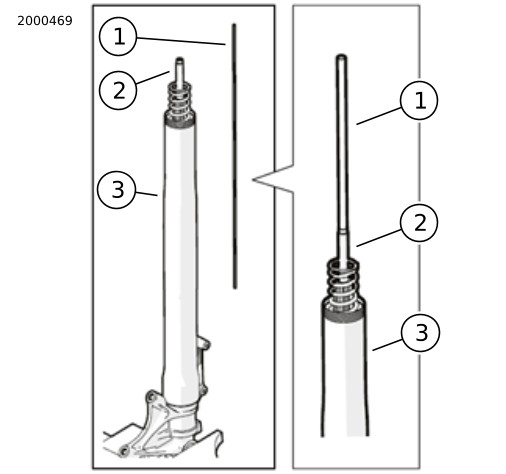
Figure 24. Install Adjustment Rod | ||||||||||||||||
| 58. | See Figure 25. Install top cap (5) on shaft, making sure preload and damping are at minimum settings. | |||||||||||||||||
| 59. | Make sure to install correct top cap on correct fork leg. a. Compression on left (1). b. Rebound on right (2). | |||||||||||||||||
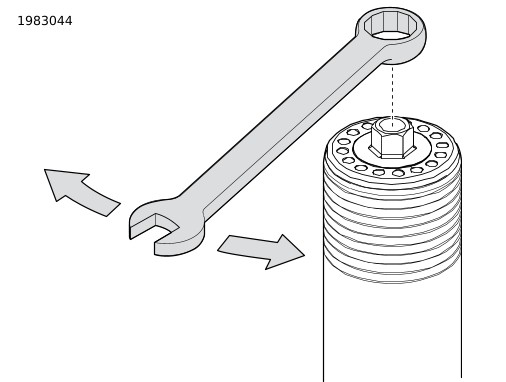
| 60. | Use spanner (4) and wrench or socket (3) to tighten top cap lock nut. Tighten. Torque: 20 N·m (177 in-lbs) Special Tool: 17MM SPANNER TOOL (14900172) Special Tool: 14MM PRELOAD SOCKET TOOL (14900176) | 
Figure 25. Install Top Cap | ||||||||||||||||
| 61. | Apply multi-purpose grease to new top cap O-ring and threads. | |||||||||||||||||
| 62. | Install new top cap O-ring. | |||||||||||||||||
| 63. | See Figure 26. Fully extend fork leg. Use top nut tool (8) and tighten top cap on outer fork tube. Tighten. Torque: 15 N·m (133 in-lbs) Special Tool: TOP CAP R&T (14900160) | |||||||||||||||||
| 64. | Adjust preload (3) in both fork legs to same setting as prescribed in iSheet for rider, passenger, and cargo weight or to customer’s setting prior to performing service. Special Tool: 14MM PRELOAD SOCKET TOOL (14900176) | |||||||||||||||||
| 65. | Adjust compression and rebound damping adjusters (4) as prescribed in iSheet or to customer’s setting prior to performing service Special Tool: 3MM ALLEN KEY TOOL (14900159) |
Figure 26. Assemble Fork Tube | ||||||||||||||||
| 66. | Clean components prior to installation to vehicle. a. Use an O-ring and surface-finish-safe detergent. b. Do not use brake cleaner or any other solvent. c. SPEEDSOLV is recommended by Öhlins. |